


Drying Rooms for Faster, Controlled Finishing

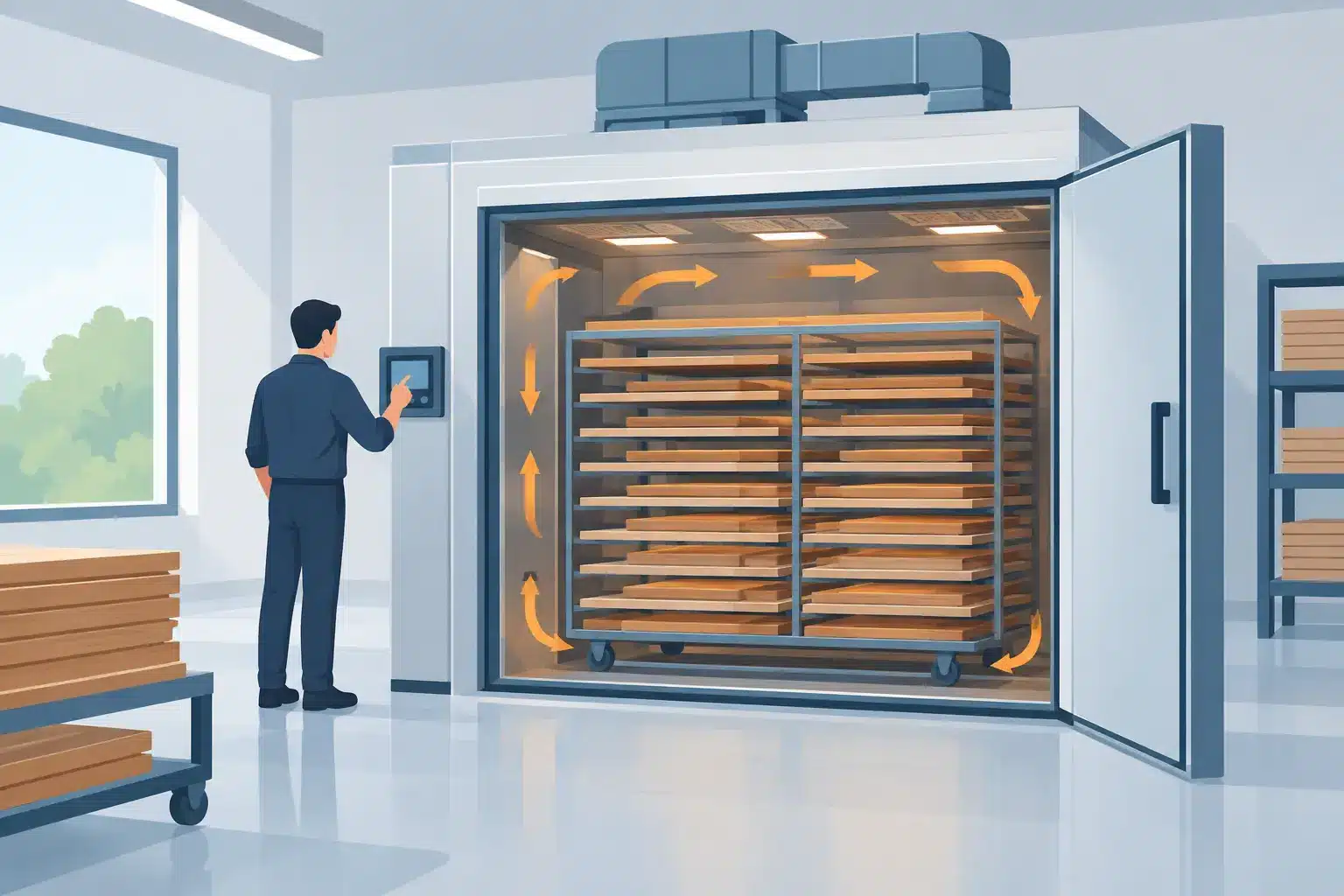
A freshly coated part can leave the spray booth looking right, yet still hold up the whole job if it takes too long to dry or cures unevenly. Drying rooms give bodyshops, manufacturers and finishing departments a controlled space for moving coated work through this stage reliably, rather than leaving it in an open workshop where temperature, dust and handling are harder to manage.
For many businesses, the reason for installing a drying room is not simply to apply more heat. It is to make finishing predictable. When parts can be dried or cured at a known temperature, with suitable airflow and enough space around them, production planning becomes easier and rework is less likely. The correct design depends on the coating system, the size and volume of work, available services and how the room will fit into the wider process.
What drying rooms are designed to do
A drying room is an enclosed, purpose-designed area used after spraying, coating or washing. Depending on the application, it may provide heated air, controlled ventilation, filtration and racking or an overhead track system to support parts during drying. It can be used for air drying, force drying or low-temperature curing.
The distinction matters. Drying is the evaporation of water or solvents from a coating. Curing is the chemical hardening process that allows the coating to reach its intended durability. Heat can speed up both processes, but only within the limits set by the paint or powder manufacturer. Raising the temperature without considering the coating specification, substrate and flash-off period can create defects rather than reduce cycle times.
In a professional finishing operation, the room also protects work between processes. A component that is dry enough to handle but left in a busy fabrication area can still pick up dust, fibres, grinding debris or accidental damage. Separating spraying, drying and assembly gives each stage a clearer purpose.
Where a drying room adds value
Drying rooms are used across a wide range of UK finishing environments. Automotive bodyshops may use them for panels, bumpers and small vehicle components. Joinery manufacturers use them for doors, cabinetry and furniture. Metal fabricators and engineering businesses may dry frames, machined components, fabricated assemblies and specialist coated parts.
They are particularly useful where the spray booth is needed for its primary task: applying paint. If painted work remains in the booth until it has fully dried, the booth is unavailable for the next job. A separate drying area can reduce this bottleneck, provided that handling between the booth and drying room is practical and the coating system allows it.
The gain is not always a dramatic reduction in drying time. In lower-volume workshops, the bigger benefit may be consistency through colder months, a cleaner holding area and a more organised workflow. In a higher-output facility, the same room may be designed around batch capacity, shift patterns and the number of jobs required per day.
Designing drying rooms around the actual workload
The first question is not usually, “How large is the available corner of the workshop?” It is, “What must be inside the room at the busiest point of the day?” That could be a set number of vehicle panels, several joinery items on mobile trolleys, or a long fabricated assembly suspended from a track.
Internal dimensions need to allow for the workpiece, the method of loading, safe clearance around it and air movement. A room that technically accommodates a part but leaves no space for an operator to manoeuvre a trolley is not an efficient solution. Door width and height are equally important. They should suit the largest regular item, including its trolley, jig or hanger, rather than the average job.
Capacity should be considered in terms of cycle time. For example, if a workshop sprays four batches during a shift and each batch occupies the drying room for two hours, the room needs capacity for overlapping batches or a process that prevents a queue forming at the booth. APEX Coating Systems will normally assess this alongside the layout of the spray area, preparation space and material movement routes.
Airflow and ventilation
Heat alone does not produce a good finish. Moisture and solvent vapours need to be removed from the drying space, while incoming air should be managed to avoid bringing contamination onto wet coatings. The required airflow rate depends on the room volume, product being dried, coating type and process.
Air distribution is just as relevant as the total volume of air. Poorly placed supply and extract points can leave still areas around racks or large parts. These areas may dry more slowly, while a strong direct air stream can disturb a wet film or cause the surface to skin over too quickly. The aim is even, controlled circulation across the work, not a blast of air aimed at one side of the room.
Where solvent-based coatings are involved, extraction design and electrical equipment selection must be considered carefully as part of the wider safety assessment. A drying room should never be treated as a simple heated store. The coating products used, their safety data, the quantity of work and the operating procedure all affect the specification required.
Heat source and temperature control
Drying rooms can be heated using systems selected around the site and application, including direct-fired, indirect-fired or electric options. The most suitable choice will depend on the available utilities, required temperature range, running costs, ventilation arrangement and the type of coating being processed.
Accurate control is more useful than excessive temperature. Many liquid coatings benefit from a flash-off period before heat is applied, allowing solvents or water to leave the film in a controlled way. Substrates also have limits. Timber, plastics, bonded assemblies and certain sealants may not tolerate the same curing temperature as a steel component.
A well-specified control system should allow operators to set and monitor the relevant stages of the process. This may include ambient ventilation, a timed warm-up, a drying or curing period and a cool-down phase before unloading. The exact sequence should follow the paint supplier’s technical data rather than assumptions based on previous products.
Filtration, cleanliness and lighting
The cleanliness required inside drying rooms varies. A room used for coated structural steel has different needs from one handling high-quality furniture or vehicle refinishing. Even so, filtered incoming air and a cleanable internal finish help reduce the risk of dust settling on wet surfaces.
Lighting should be bright enough for staff to inspect parts safely, identify obvious surface issues and load equipment without damaging work. It is not a replacement for a dedicated inspection area, but poor lighting encourages handling errors and makes housekeeping more difficult. Fittings must be appropriate for the environment and positioned so they do not create awkward shadowing around racks or tall components.
Layout and material handling matter as much as the room
A drying room can improve flow only if parts can reach it without delay. In some facilities, mobile drying racks are the simplest answer. They give flexibility for mixed work and allow parts to be loaded in the spray booth before being moved as a batch. In others, an overhead track can reduce manual handling and keep larger components clear of the floor.
Consider where operators will place empty trolleys, how doors open, whether forklifts or pallet trucks pass nearby, and where cooled work goes next. These details are often missed when a drying room is planned as a standalone item. The result can be a clean, heated space with a congested entrance and unnecessary double handling.
The room should also be located sensibly in relation to the spray booth. A long route through a busy workshop increases the chance of contamination and knocks while the coating is still vulnerable. Short, controlled transfers are preferable, particularly for high-finish work.
Operating and maintaining the room
Consistent results rely on routine operation as much as equipment design. Operators should know the permitted temperature ranges, required flash-off times, loading limits and when a part is safe to handle. A simple process sheet is often valuable where several coating systems are used.
Filters require planned inspection and replacement. A blocked filter can reduce airflow, affect temperature performance and place unnecessary load on fans. Internal surfaces, grilles, racks and tracks should be cleaned regularly, as accumulated dust eventually finds its way onto finished work.
It is also worth reviewing energy use. Heating an oversized room for a small number of parts can be expensive, while undersizing it may push operators to overload racks and restrict airflow. Controls, insulation, door discipline and sensible batch planning all influence operating cost.
The best drying room is one that fits the coating process rather than forcing the process to fit the room. Start with the workpieces, coating data and daily throughput, then design the dimensions, airflow, heat and handling around those facts. That approach produces a finishing area that supports quality on ordinary working days, not just on a layout drawing.
