

Spray Booth Consultancy for Better Finishing

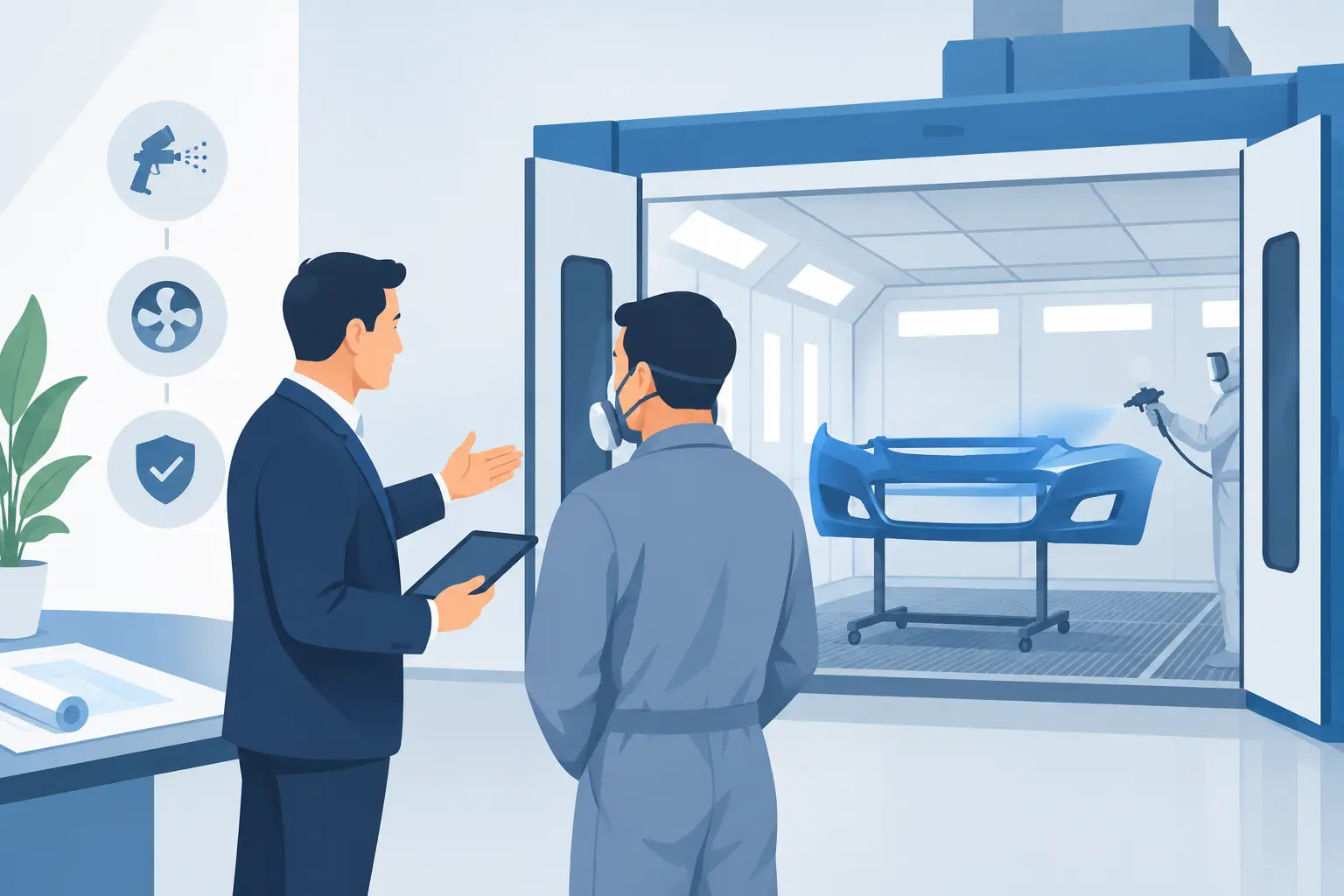
A spray booth is rarely just a box for applying paint. It affects the quality of the finish, the speed of the process, energy use, operator comfort, fire safety and the usable space around it. Effective spray booth consultancy begins by understanding those practical conditions before a booth type, size or heating package is discussed.
For a bodyshop, the priority may be vehicle throughput and predictable bake times. For a joinery manufacturer, it may be handling large panels without disturbing clean airflow. A metal fabricator may need to contain overspray from a particular coating while accommodating awkward fabricated parts on an overhead track. The right answer is therefore not always the largest booth or the highest specification on paper. It is the system that suits the work being done, the building it sits in and the output the business needs.
What spray booth consultancy should cover
A useful consultation considers the complete finishing process, not simply the spray area. That includes preparation, paint mixing, spraying, flash-off, drying, curing, movement of workpieces and filter maintenance. If one part of that sequence causes delays, a new booth alone may not deliver the improvement expected.
The first discussion should establish what is being coated, which products are used and how frequently spraying takes place. Water-based automotive refinishing products, solvent-based industrial coatings, stains, lacquers and powder coatings all place different demands on extraction, filtration, heating and working practices.
It should also identify the physical constraints of the premises. Ceiling height, door positions, available floor area, incoming electrical supply, gas availability, drainage, external duct routes and neighbouring properties can all influence what is viable. A system that looks straightforward on a drawing can become expensive or impractical if there is no sensible route for ductwork or insufficient space for an air handling plant.
Good advice also accounts for future work. A workshop that currently sprays furniture doors may later take on larger carcasses or increase batch volumes. Allowing sensible capacity for growth can be worthwhile, but overspecifying a system for a possible future need can add unnecessary capital and running cost. This is where an honest assessment of likely production plans matters.
Start with the application, not the booth model
The workpiece sets many of the basic design decisions. Its dimensions determine internal booth width, length and height, but clearance matters as much as the part itself. Operators need room to move safely around the item, maintain a consistent spray distance and access every face without repeatedly repositioning the work.
For vehicle refinishing, this normally means considering the largest vehicle likely to enter, not the average car. For industrial finishing, it means considering the longest fabricated section, the widest frame or the tallest assembly, including jigs and hanging points. Where components are suspended, the height of the overhead track and the distance needed for loading must be included in the layout.
The coating process then influences the air movement required. Downdraught booths draw air vertically through a grated floor, helping control overspray around vehicles and providing a clean working environment. Semi-downdraught and cross-draught arrangements can suit other applications and premises, particularly where a full pit or raised floor is not practical. Neither approach is automatically superior. The suitable choice depends on the finish standard required, building constraints, budget and the type of work being sprayed.
Heating and drying requirements deserve the same attention. A heated booth can improve consistency and reduce drying time, but its benefit depends on the coating manufacturer’s requirements, the number of cycles per day and the thermal performance of the system. A business spraying occasional small batches may have different priorities from one running continuous shifts. The consultancy process should calculate likely use rather than assuming that a high-output burner is always the best option.
Airflow, filtration and extraction are core design decisions
A booth must provide controlled airflow that carries overspray away from the operator and workpiece while supporting an even finish. Air volume, air speed and the path the air takes through the enclosure all matter. Poorly balanced airflow can contribute to dust inclusion, uneven coating deposition and uncomfortable working conditions.
Filtration is part of that same system. Intake filters help prevent airborne contamination entering the booth, while extract filters capture paint particulate before air is discharged. The filter type and surface area should suit the coating material and anticipated volume of overspray. A filter arrangement that is economical to install can become costly if it blocks quickly, restricts airflow or requires frequent shutdowns for replacement.
Consultancy should include a practical filter maintenance plan. Pressure gauges or manometers provide a clear indication of filter loading, rather than relying on guesswork. Recording filter changes also helps a business understand its coating use, maintain performance and plan consumable costs.
Extraction cannot be designed in isolation from the building. Discharge position, duct length, bends, access for cleaning and weather protection all affect performance. External noise and the location of neighbouring doors, windows or air intakes must also be considered. The installation needs to support safe operation without creating an avoidable issue elsewhere on the site.
Layout determines whether the investment saves time
A well-designed finishing area reduces unnecessary handling. Ideally, work moves through a logical sequence from preparation to spraying, drying, inspection and despatch. In practice, existing buildings often require compromise, but the workflow should still be mapped before equipment is selected.
For example, placing a paint mixing room close to the booth may reduce walking time, yet it must be designed and located appropriately for the materials stored and used. A drying room may increase output where the booth would otherwise be occupied by parts waiting to cure. Overhead track systems can reduce manual lifting and make it easier to turn or transfer components, but they require sufficient structural support, loading space and clear travel paths.
Space around the booth is often underestimated. There must be room for doors to open, vehicles or trolleys to manoeuvre, filters to be changed and equipment to be serviced. Plant access is particularly important. If a burner, fan or control panel cannot be safely reached after installation, routine maintenance becomes slower and more expensive.
Safety and compliance need early consideration
Spraying and coating operations can involve flammable materials, airborne contaminants, ignition sources and waste products. These risks should shape the facility design from the outset, alongside finish quality and productivity.
A consultant can help identify the equipment and layout considerations relevant to the process, including suitable ventilation, electrical equipment, lighting, fire precautions, material storage and safe access. The final responsibilities for risk assessment and compliance remain with the dutyholder, but early technical advice can prevent costly alterations later.
For UK businesses, this may involve considering duties under COSHH, DSEAR and workplace ventilation requirements, as applicable to the process. The detail depends on the products used, quantities stored, the premises and the way staff work. Coating data sheets and safety data sheets should be reviewed as part of the specification process, not filed away after purchase.
Lighting is another practical safety and quality issue. Operators need clear, even illumination to see coverage, defects and colour variation. Poor lighting encourages rework and makes detailed inspection harder. Booth lighting should be appropriate for the environment, positioned to reduce shadowing and accessible for maintenance.
Installation is only the start of the working life
The handover of a new spray booth should include more than switching it on. Operators need to understand controls, heating and drying cycles, filter checks, daily housekeeping and the signs that extraction performance may be reducing. Clear operating procedures help protect both the finish and the equipment.
Planned maintenance should cover fans, motors, belts where fitted, burners, sensors, door seals, lighting, ductwork and safety controls. The correct intervals depend on use, but regular checks are cheaper than waiting for a breakdown during a busy production period. Calibration, airflow testing and servicing can also provide useful evidence that the system is being managed properly.
At APEX Coating Systems, the practical aim is to match the finishing facility to the real work on site, rather than force a standard booth into an unsuitable space. That means asking detailed questions early, being clear about compromises and designing around the process that will keep the business moving.
The best time to seek advice is before drawings are finalised, services are installed or an old booth fails completely. A considered specification gives a business more than a place to spray: it gives operators a safer, more predictable process and a finishing area that can support the work ahead.
