


Automotive Spray Booth Installation Essentials

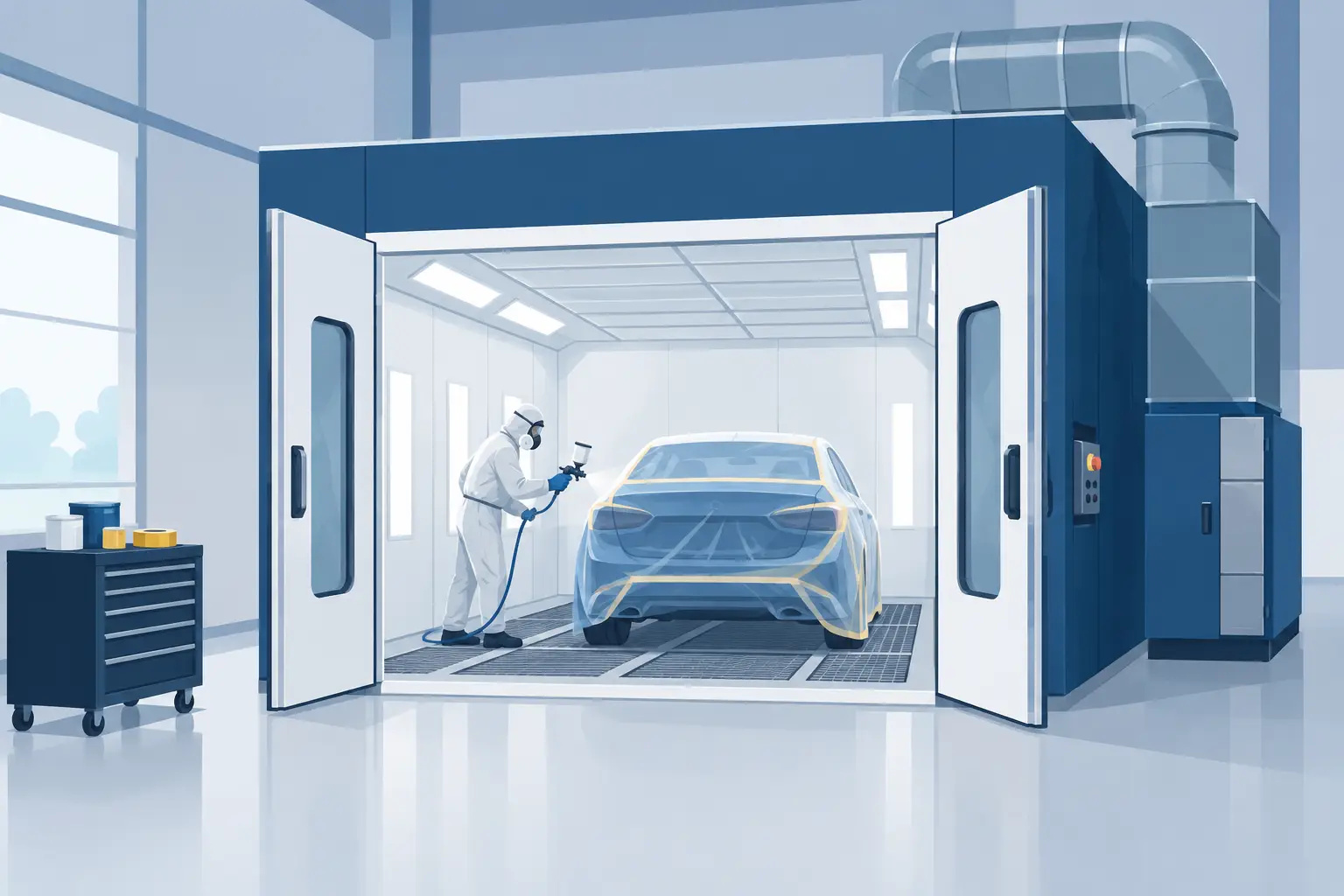
A new booth can improve finish quality, throughput and working conditions, but only if it is installed around the way the bodyshop actually operates. Automotive spray booth installation is not simply a matter of positioning a cabin and connecting power. The building, vehicle flow, extraction route, fuel type, paint system and daily workload all affect whether the finished facility performs as intended.
A well-planned installation gives technicians enough room to prepare, spray and move vehicles safely, while maintaining the airflow and temperature control required for consistent refinishing. A poorly planned one can create bottlenecks, increase energy use and make future maintenance unnecessarily difficult.
Start with the application, not the booth model
The first question is what the booth needs to do. A busy accident-repair centre painting several vehicles each day has different requirements from a specialist restoration workshop or a commercial vehicle operator refinishing vans. Vehicle size, expected cycle times, coating types and the number of painters all matter.
A full downdraught booth is often selected where high finish quality and cleaner air around the vehicle are priorities. Air is supplied from the ceiling plenum and drawn down through a grated floor extraction system, helping carry overspray away from the work. Semi-downdraught and other airflow arrangements may be more suitable where the building cannot accommodate a full pit, or where the application and budget do not justify it.
The decision should not be based on airflow direction alone. Consider the usable internal dimensions, door arrangement, lighting levels, heating output, filter access and whether the booth will need a bake cycle. A booth that technically fits a vehicle may still be impractical if technicians cannot open doors, reach panels or manoeuvre trolleys around it.
The site survey sets up a successful installation
A detailed site survey identifies issues before equipment arrives. This is where an installation moves from a quotation drawing to a workable project plan.
Floor construction is a central consideration. For a downdraught booth, the extraction pit needs suitable depth, drainage considerations where applicable and a structure capable of supporting the booth floor and vehicle loads. If a pit is not possible, a raised-floor arrangement may be considered, although this introduces ramps and affects vehicle movement, available headroom and access.
Ceiling height needs checking early. The booth structure, supply-air plenum, ductwork, lighting and roof clearances all need space. Existing steelwork, suspended services, rooflights and low eaves can influence both the booth position and the extraction route.
The survey should also establish how equipment will be delivered and assembled. Large panels, air handling sections and ductwork require clear access through doors or loading areas. In some premises, lifting equipment, temporary access arrangements or sectional delivery must be planned in advance.
Plan vehicle and technician movement
The best location is rarely just the largest empty area in the workshop. Look at the whole process: vehicle arrival, masking and preparation, paint mixing, spraying, cooling, polishing and handover. Reversing vehicles repeatedly through a busy workshop is inefficient and increases risk.
Ideally, a vehicle should move through the refinishing process in one direction with minimal handling. Leave adequate space outside booth doors for safe entry and exit, and avoid placing the booth where passing traffic can compromise the clean working area.
Utilities and ductwork need practical coordination
Spray booths rely on more than electrical power. Depending on the design, the installation may require gas, electrical supply, compressed air, ventilation ductwork, control wiring and a suitable route for exhaust discharge. Each service has implications for cost, access and compliance.
Heated booths commonly use gas-fired burners or alternative heating arrangements to bring incoming air to the required spraying and baking temperatures. The available gas capacity should be confirmed rather than assumed, particularly in older industrial units where other machinery already places demand on the supply. Electrical capacity also needs checking for fans, controls, lighting and associated equipment.
Compressed air quality is equally relevant. Water or oil contamination can affect paint application, so the air supply should be appropriately filtered and sized for the spray guns and other equipment in use. Pipework routes should be arranged to avoid trip hazards and reduce pressure losses.
The exhaust stack position deserves careful attention. It must be routed safely through or around the building, clear of obstructions and positioned with consideration for neighbouring premises, air intakes, boundaries and local requirements. Long or complex duct runs can increase system resistance, so they should be designed as part of the airflow calculation rather than treated as an afterthought.
Airflow and filtration determine day-to-day performance
A booth’s advertised dimensions do not tell the full story. The quality of the working environment depends heavily on correctly balanced supply and extract air. Too little extraction can allow overspray and vapours to linger. Poor air balance can make doors difficult to operate, draw dust into the booth or affect temperature consistency.
During automotive spray booth installation, the supply and extract system should be assembled, sealed and commissioned as one system. Filters must be correctly fitted, including ceiling intake filters and extract filters appropriate to the application. Access for routine filter changes is not a minor detail. If filters are difficult to reach, they are more likely to be changed late, which restricts airflow and places more load on fans and burners.
Filtration arrangements should reflect the coating process and local environmental obligations. A professional installer can advise on the practical role of filtration, but the operator remains responsible for running and maintaining the facility correctly. Keeping records of filter changes, servicing and any airflow checks is sensible operational practice.
Safety and compliance should be built into the design
Paint spraying involves flammable materials, airborne contaminants and high-temperature equipment. The installation must therefore be considered alongside relevant UK duties, including COSHH and DSEAR assessments, electrical safety, gas safety, fire precautions and workplace ventilation requirements.
What is required will depend on the site, coating products and equipment specification. For example, the location of control panels, isolation points and mixing-room equipment may need to reflect hazardous-area considerations. Paint mixing rooms require dedicated ventilation and suitable storage arrangements, rather than becoming a convenient corner of the workshop.
Building control, landlord permissions and planning considerations may also apply, particularly where external ductwork, stacks or structural alterations are proposed. These matters should be identified early, before installation dates are fixed. It is usually far less disruptive to alter a duct route on a drawing than after panels and roof penetrations have been completed.
Installation is only complete after commissioning
Physical assembly is a major stage, but it is not the finish line. Once the booth, ductwork and services are in place, commissioning verifies that the system operates correctly. This includes checking fan operation, airflow direction, pressures, temperatures, burner operation where fitted, door function, lighting and control sequences.
A spray bake booth should move reliably between its spraying and baking modes. The controls should be clear enough for trained operators to use without guesswork, and safety interlocks should be tested. Any issues with air balance, unusual noise, vibration or heat distribution should be addressed before production begins.
Operator handover is equally valuable. Staff need to understand daily checks, how to use the controls, when filters need attention, what warning indicators mean and which maintenance tasks require a qualified engineer. This protects the investment and helps avoid avoidable downtime.
Allow for maintenance and future change
A bodyshop layout that works at opening can become restrictive as volume grows. Leave sensible access around fans, burners, control panels and filter sections. Avoid boxing in service areas with racking or storage, and make sure replacement filters and service parts can be brought to the equipment without dismantling half the workshop.
It is also worth considering what may change in the next few years. A business planning to take on larger vehicles, add preparation bays or introduce an additional painter may benefit from designing the surrounding workflow now. APEX Coating Systems approaches installations as part of a wider finishing process, because the booth, preparation area, mixing room and extraction arrangement need to work together rather than compete for space.
The right installation is not always the largest or most complex specification. It is the one that fits the premises, supports the coating process, can be maintained properly and gives the team a practical place to produce consistent work every day.
