

Can Overspray Ignite Inside a Spray Booth?

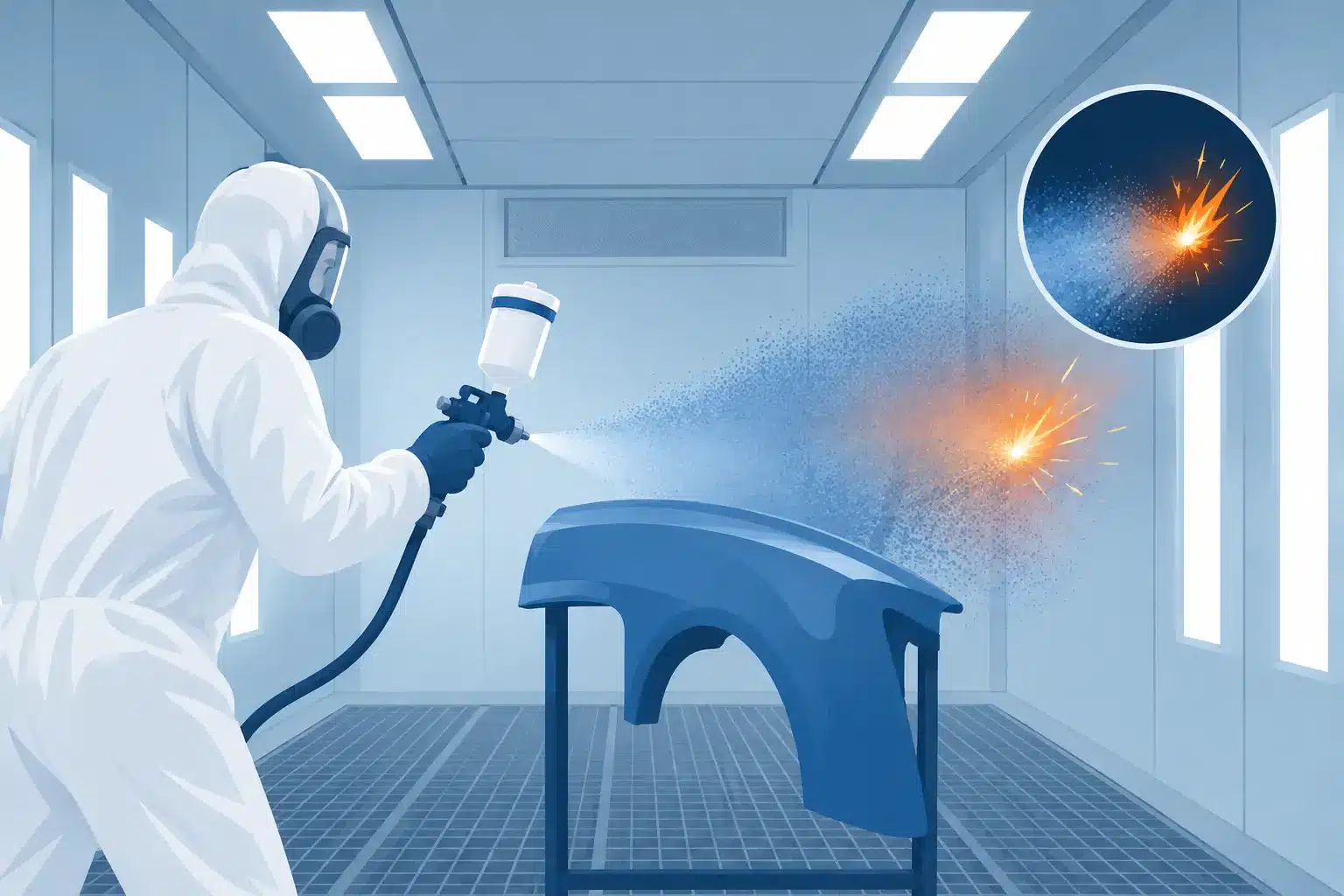
A visible cloud of paint mist around a spray gun is not just a housekeeping issue. In the wrong conditions, it can become part of a flammable atmosphere. So, can overspray ignite? Yes – where a coating contains flammable solvents or other combustible components, airborne overspray and vapours can ignite if they meet a suitable ignition source.
The practical question for a bodyshop, joinery manufacturer or fabrication business is not whether every coating will catch fire. It is whether the spraying process, booth design, extraction performance and working practices keep the risk under control for the products actually being used.
What makes overspray flammable?
Overspray is made up of fine droplets that do not land on the workpiece. Some are captured by booth filters, some settle on nearby surfaces, and some remain suspended in the air long enough to travel through the spray zone and extraction system.
With solvent-borne paints, lacquers, thinners and cleaners, the greater fire risk often comes from the vapour released as the product atomises and evaporates. Fine droplets can also burn readily because they have a large surface area relative to their volume. If the concentration of mist or vapour in air falls within its flammable range, one spark, hot surface or flame may be enough to ignite it.
Water-based coatings generally reduce the solvent load, but they should not automatically be treated as non-flammable. Many contain co-solvents, and the cleaning products, activators, hardeners or ancillary materials used alongside them may present their own hazards. The safety data sheet for each material is the starting point, not the label description alone.
Mist, vapour and settled deposits are different risks
Airborne mist and vapour present the most immediate ignition concern during spraying and flash-off. Settled overspray creates a different problem. Deposits in booth corners, ductwork, on lights, fan housings, grilles and surrounding equipment can accumulate over time. These residues may be combustible and can allow a small fire to spread more quickly than expected.
A well-run spray area therefore needs to control both the atmosphere during spraying and the build-up of coating deposits between jobs.
When can overspray ignite?
For ignition to occur, three conditions normally have to come together: combustible material, oxygen and an ignition source. Spray operations naturally involve air and, in many cases, combustible products. The purpose of a properly designed booth is to prevent mist and vapours reaching dangerous concentrations and to remove them safely from the working area.
The risk rises where extraction is inadequate, filters are overloaded, the booth is used beyond its intended application, or spraying takes place outside a controlled enclosure. A small component sprayed informally near a bench can create a greater uncontrolled risk than a larger item sprayed correctly in a suitable booth.
Common ignition sources include electrical equipment that is unsuitable for the hazardous area, static discharge, sparks from grinding or welding, naked flames, cigarettes, portable heaters and hot surfaces. Vehicle exhausts, damaged cables and poorly maintained motors can also be relevant depending on the layout.
Static electricity deserves particular attention. Fast-moving air, atomised coatings and synthetic clothing can all contribute to static build-up. Bonding and earthing conductive items, spray equipment and metal workpieces helps reduce the chance of a discharge. It is not a substitute for effective ventilation, but it is an essential part of controlling ignition sources.
Why extraction is the first line of control
Extraction does more than improve visibility for the sprayer. It draws overspray away from the operator and workpiece, carries it through the filtration stages and maintains a controlled airflow pattern through the booth.
The required airflow depends on the booth type, dimensions, opening size, coating process and application method. A crossdraft booth, for example, needs enough air movement from the intake end towards the extract end to prevent paint mist hanging in the working zone. Downdraft and semi-downdraft arrangements manage airflow differently, but the same principle applies: contaminated air must be removed consistently rather than allowed to escape into the workshop.
Too little airflow can allow mist and vapour to build up. Excessive airflow is not automatically better either. It can disturb the spray pattern, increase contamination and make it harder to maintain stable booth conditions. System design should match the process, not simply aim for the largest fan available.
Filters are central to this performance. As extract filters load with paint, resistance increases and airflow can fall. If filters are not inspected and changed at suitable intervals, the booth may look operational while performing below the level needed for safe, clean spraying. Differential pressure monitoring, airflow checks and a documented filter-change routine provide a more reliable basis than changing filters only when they look visibly dirty.
Booth design matters beyond the spray gun
A spray booth is a controlled work area, not just a room with a fan. The fan, motor, lighting, electrical components, heating arrangement, ductwork and filtration system all need to suit the substances and process involved.
For solvent-based spraying, the equipment specification must take account of hazardous-area requirements and the potential presence of flammable atmospheres. In the UK, this is normally considered through the Dangerous Substances and Explosive Atmospheres Regulations 2002, commonly known as DSEAR. The dutyholder should assess the substances used, identify where explosive atmospheres could occur and put proportionate controls in place.
That assessment should reflect real working conditions. It should include paint mixing, gun cleaning, flash-off, waste handling and maintenance, not only the few minutes when the trigger is pulled. A mixing room without suitable ventilation or a bin of solvent-soaked wipes beside the booth can undermine an otherwise well-specified installation.
Heating also needs careful consideration. Direct-fired heating may be appropriate in a correctly designed and installed system, but combustion products and ignition sources must be kept separate from the spray atmosphere. Drying and curing cycles should follow the equipment design and coating manufacturer’s instructions, rather than being improvised with portable heaters.
Practical controls for reducing ignition risk
The most effective approach combines suitable equipment with disciplined everyday operation. A spray booth cannot compensate for poor cleaning, unsuitable products or unsafe activities nearby.
Keep spraying, paint mixing and gun washing in their designated controlled areas. Store flammable materials in suitable containers, keep lids closed when products are not in use, and remove waste regularly. Overspray-coated masking, wipes and filters should not be allowed to accumulate beside the booth.
Before spraying, check that extraction is running, doors are in the correct position and no alarms or interlocks have been bypassed. Keep ignition-producing work, including welding, cutting and grinding, away from the spray and flash-off area. Where maintenance work is required, the area should be isolated, cleaned and made safe under an appropriate permit or site procedure.
Routine cleaning is a fire control as much as a quality control. Pay attention to areas that are easy to miss: extraction grilles, booth floor pits, corners, light covers, doors, duct access points and the exterior of equipment. Never use compressed air to blow settled overspray around the workshop, as this can re-suspend combustible dust and residues.
Staff training should cover the specific coatings and equipment on site. Operators need to know what a drop in extraction sounds or feels like, when filters require attention, where emergency stops are located and what must not enter the booth. Clear procedures are more useful than a generic safety notice pinned to a wall.
Signs that need investigation
A strong solvent smell outside the booth, visible paint mist escaping through doors, slow clearing after spraying, unexplained deposits around the extraction side, or frequent finish defects can all indicate airflow or maintenance issues. They do not prove an ignition risk on their own, but they are reasons to inspect the system rather than carry on regardless.
Changes to the process also warrant review. Switching from water-based to solvent-borne products, using a different thinner, increasing production volume, fitting a new spray gun, or converting part of the booth for drying can alter the risk profile. The original installation should be assessed against the new use.
A controlled spray environment is the real safeguard
Overspray can ignite, but ignition is not an unavoidable part of professional finishing. The risk is managed by matching the booth and extraction system to the coating process, controlling ignition sources, maintaining filters and airflow, and treating cleaning and waste handling as part of the operation.
If a spray area has changed over time, or its extraction performance is uncertain, it is worth reviewing the whole process before a minor maintenance issue becomes a serious safety problem.
